
What You Do When No One's Watching: The Career Quality That Matters Most
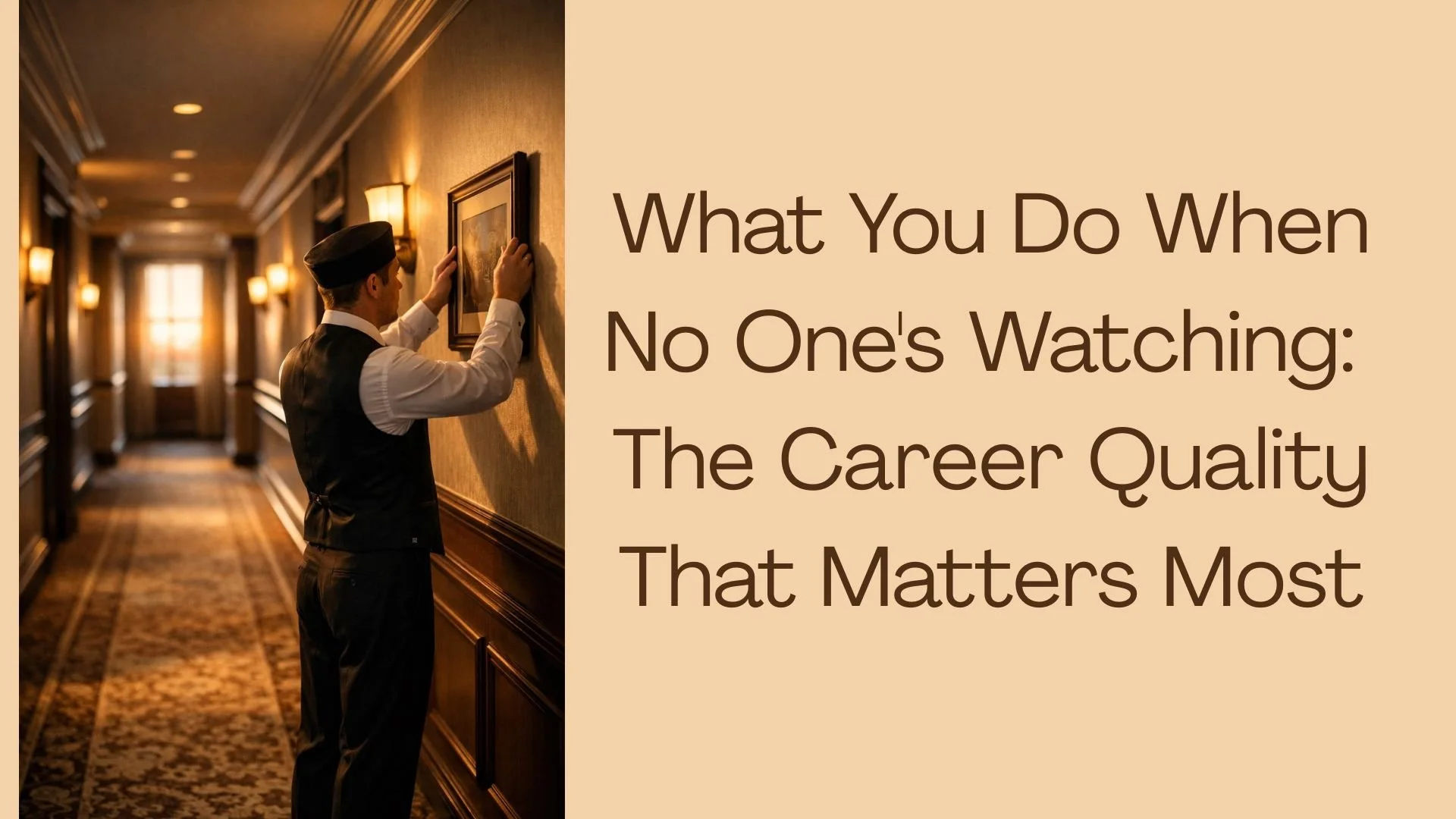
Think about the last time you were alone on your shift, maybe late at night, or early morning before your manager arrived. A guest made a request. A small issue came up. Nobody was watching. Nobody would know if you took the shortcut.
What did you do?
That moment, right there, reveals more about your career potential than any interview answer or resume bullet point ever could.
The Difference Between Following Rules and Being Excellent
In hospitality, we're surrounded by rules. Checklists for everything. SOPs that tell us exactly how to fold a napkin, answer the phone, set up a room. And yes, following these standards is important.
But here's what nobody tells you early in your career:
Following rules when someone's checking makes you reliable. Following standards when nobody's watching makes you exceptional.
The gap between these two? That's what determines who stays stuck at the same level for years, and who gets noticed, promoted, and sought after.
What Managers Really Look For
I've spent years consulting with hotels and helping place talent across the hospitality industry. When I ask GMs and owners what they look for in their next hire or promotion, they rarely talk about technical skills first.
They talk about this:
"I need someone I can trust when I'm not there."
"I want team members who care about the guest experience, not just completing their checklist."
"I'm looking for people who take ownership."
Notice what they're really describing? They're looking for people whose behaviour doesn't change based on who's watching.
The Two Types of Team Members
Type 1: The Compliance Mindset
This person asks: "What do I have to do to avoid getting in trouble?"
They perform brilliantly during manager rounds. Their section is spotless when the GM walks through. But when supervision drops, night shifts, weekend coverage, busy periods when everyone's stretched thin, their standards slide.
They're not bad people. They're just focused on external validation and external accountability.
The career reality: This person plateaus. They get the job done, but they never become the person everyone wants on their team. They wait to be told what to do.
Type 2: The Character Mindset
This person asks: "What's the right thing to do, regardless of who sees it?"
They fix the crooked frame in the corridor even though they're not on housekeeping duty. They re-clean a room if it doesn't meet their standard, even if it means staying late. They go out of their way for a guest because that's who they are, not because someone's measuring their service scores.
The career reality: This person gets promoted. They become the team member everyone trusts. Managers fight to keep them. Guests ask for them by name.
Why This Matters for Your Career
If you're early in your hospitality career, this might be the most important thing you learn:
Your reputation is built in the moments nobody sees.
The front desk agent who processes late check-outs accurately at midnight when the audit team won't review it until tomorrow.
The chef who plates the last breakfast order of the morning with the same care as the first, even though the restaurant is empty.
The housekeeping attendant who reports a maintenance issue instead of just closing the door and moving on.
These are the moments that define who you become.
The Ripple Effect
Here's what's fascinating: when you develop this character-driven approach to work, everything else starts falling into place.
Your stress decreases. You're not constantly worried about getting caught doing something wrong, because you're already doing things right.
Your confidence grows. You know you're the same person at 3am as you are during a VIP arrival. There's no performance anxiety.
Your relationships strengthen. Colleagues trust you. Managers rely on you. Guests feel the difference in how you show up.
Opportunities find you. When a position opens up, your name comes up first—not because you're loudest or most visible, but because people know they can count on you.
How to Develop This Quality (Practical Steps)
Okay, so you understand why this matters. But how do you actually build this into who you are?
1. Start with one private standard
Pick one thing, just one, that you'll do excellently even when nobody's watching.
Maybe it's the way you fold napkins. Maybe it's how you greet colleagues in back-of-house. Maybe it's the cleanliness of your station at the end of your shift.
Make it non-negotiable. This is your standard, regardless of supervision.
2. Ask yourself the mirror question
Before you take a shortcut or skip a step, ask:
"If my manager saw this decision on video tomorrow, would I be proud of it?"
If the answer is no, don't do it. Even if nobody will ever know.
3. Fix things that aren't your job
See a piece of rubbish in the corridor? Pick it up.
Notice a guest struggling with directions? Stop and help.
Spot a colleague overwhelmed during service? Jump in.
These small acts train your brain to care about outcomes, not just your assigned tasks. That's the foundation of leadership.
4. Treat back-of-house like front-of-house
The kitchen, the staff area, the receiving area, these spaces reveal culture.
If you only care about standards in guest-facing areas, you're still in compliance mode. Character means the same standards everywhere.
5. Own your mistakes privately
When you mess up and nobody notices, fix it anyway. Report it if needed.
This is hard. It's tempting to stay quiet. But this is where character is built, in the choice to be accountable even when you could get away with it.
The Long Game: What This Means for Your Career
Here's the truth: developing character-driven work habits is slow. You won't see results tomorrow.
But over months and years? This becomes your unfair advantage.
In interviews, you'll have real stories about times you went above and beyond. Not because you're trying to impress, because that's genuinely who you are.
In performance reviews, your manager will struggle to find examples of inconsistency, because you're the same person all the time.
In promotions, you'll be the obvious choice, the person everyone knows will uphold standards even without supervision.
In references, your previous employers will remember you as exceptional, not just competent.
This is how careers are built in hospitality. Not through shortcuts or self-promotion, but through being someone people can count on.
What's Next?
If you're looking for support on your career journey, whether you're trying to break into a new role, prepare for your next interview, or figure out where you're headed next, that's exactly what we built Eclat NextStep for.
We work with hospitality professionals at every level to help you get clear on your path, sharpen your skills, and position yourself for the opportunities you want.
Because your career deserves more than just luck. It deserves strategy, support, and someone in your corner who understands this industry.